

Hello all! I am back and excited to share my makes for the summer.
While looking for something to wear, given the heat and humidity, it became obvious quickly that there are two gaps in my summer wardrobe: a sundress and a maxi dress with ruffles. After all these years, I had neither one! From Instagram’s MeMadeMay discussions, true sundresses are lightweight sleeveless dresses that expose the shoulders, arms, possibly the back, and typically have straps. Before I retired, I was too busy to shop so any sleeveless dress was good enough. Also, from social media, lightweight maxi dresses with tiered ruffles are on trend. Looking back, I avoided these two styles of dresses because they reminded me of what little girls would wear. Now in my later years, I seek comfort above all else. These dresses seemed they would keep me cool for the summer.

For the sundress, I liked the features of Vogue V1625 by designer Tracy Reese. It looked extraordinary with the cowl neck in the front, the cross strap in the back, the slit in the front, and the high-low hem formed by the flounce at the bottom. I was surprised it did not require a lining. I wanted to try rayon, a breathable fabric. The pattern suggested rayon challis, but I came upon Fabric Mart’s bold and colorful (straw, white, cobalt blue, dark pink) floral 100% rayon crepe and could not let it go. From experience, I found rayon crepe more difficult to sew and delicate to handle than challis, but, when the fabric arrived, the print, the colors, and the drape made me forget my apprehension. I was going to wear this for my 19th wedding anniversary.

I pre-washed the rayon crepe in warm water and dried it in the delicate setting in the dryer. I ensured the fabric was completely dry before handling it. Once out of the drier and on the cutting table, I noticed the fabric shrunk tremendously. I pinned it well to the paper pattern pieces; rayon stretches out with the slightest of movement. When I unpinned the pattern pieces from the fabric after they had been cut, I saw that the fabric had shifted (probably from my scissors) so I applied starch for stability before recutting them more accurately. Well, once the fabric dried from the starch application, I noticed the fabric shrunk some more, especially on the bias of the flounce! I later read that some sewists prewash rayon TWICE before sewing. I trimmed the pieces where necessary, trying not to flatten the unique ripples of the crepe. I shortened the entire flounce by ¾ inch, the shrinkage in that area. At the end, the shortened length was good for me- what luck! The shrinkage also affected the back pieces where the curved portions landed on a bias. Decreasing the seam allowance to 3/8 inch put me on track for size 14; my size 16 muslin was too big anyways.

I used Schmetz size 65 universal needle and relied on my sewing machine’s built-in walking foot. The shrinkage did not leave enough fabric for French seams suggested by the pattern so I serged the seams instead. Because rayon crepe stretches out easily through movement or wetness whether through humidity or sweat, I fused interfacing to the underarm area for stability. By the way, pressing was better than going back and forth with the iron. The hardest task was attaching the straps in a way that will not allow the cowl to dip so low in the front as to expose more than I desired and buckle out in the center back area between the straps due to the softness of the fabric. This required several fittings. In terms of modifications to the pattern, I omitted the exposed zipper because it would disrupt the fabric’s beautiful print. I also omitted the slit in the front because the fabric tended to be wavy but kept this detail in the left flounce. The ties gave some form to the back of the dress so I kept them, even though it was not always easy to reach back and make a standout bow. At the end, I overcame the shrinkage issue and now have a proper fitting bra friendly dress. I am happy with my first ever sundress. I was proud to wear it to an outdoor dinner for my anniversary!


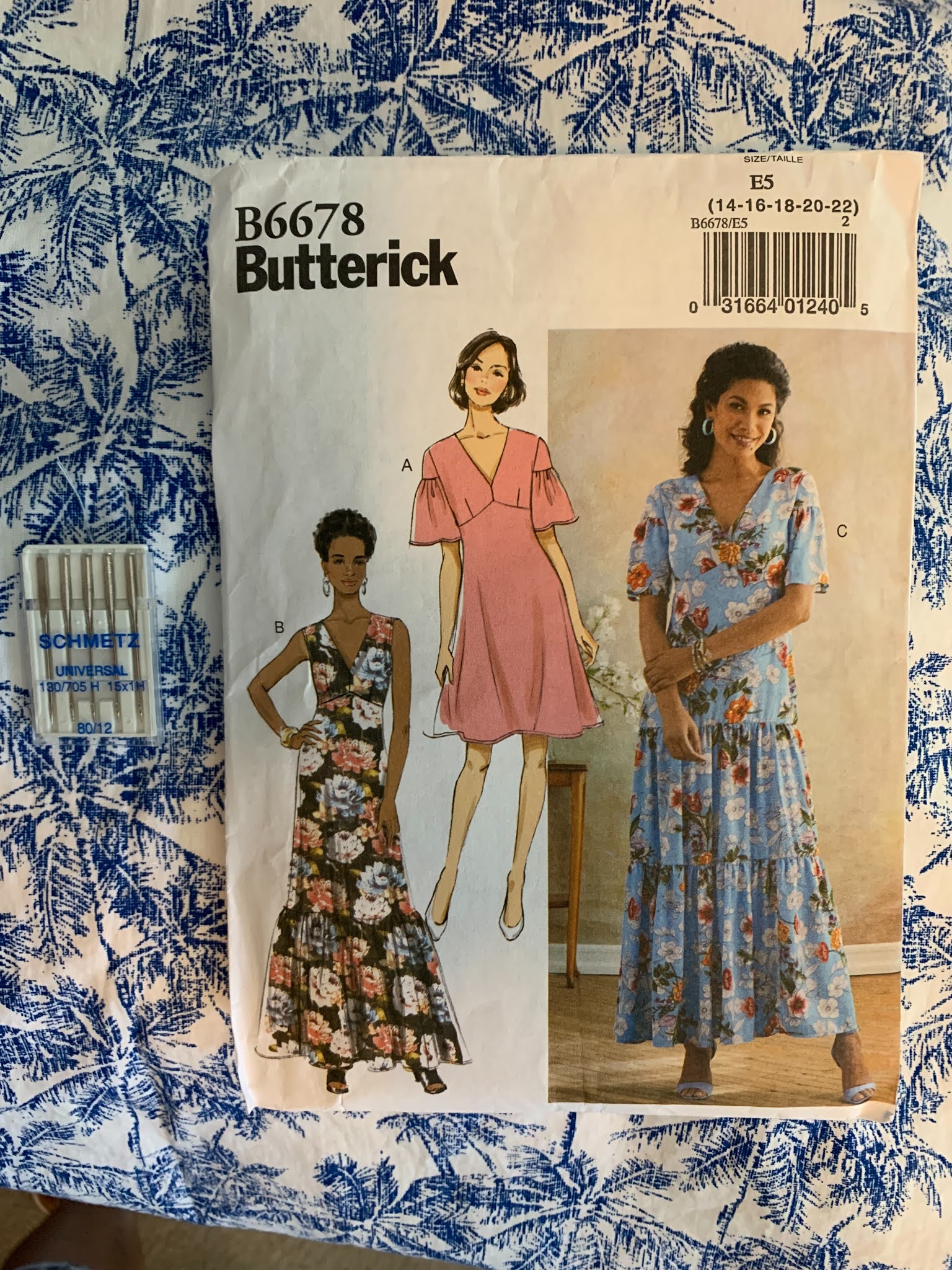
For the maxi dress with ruffles, I decided to sew Butterick B6678, View C with the ruffles from View B. I liked the grown-up look of the close-fitting bodice with the V-neck, the unique ruffle detail in the sleeves, and the option for two volumes of ruffles. I chose Fabric Mart’s cobalt blue and white 100 % cotton poplin shirting. Hard to believe, I did not have poplin in my wardrobe! It is lightweight, soft, and its palm trees print exuded a laid-back vibe, perfect for an upcoming tropical vacation. Because the print was on an angle in some parts of the fabric, I used the palm tree bark to ensure I was in alignment with the grainline. I prewashed the fabric in warm water and dried it in normal warm setting in the dryer; it did not shrink! Cutting was easy because it was strong and stable enough to handle any movement. Using my muslin as my guide, I did not have to modify the size 14 pattern. For the lower ruffles, I chose to have volume for added interest. I sewed with a Schmetz size 80/12 universal needle and serged the seams. This fabric sewed like a dream and, with the easy-to-follow pattern instructions, the dress came together easily. I never thought I would say it, but, yes, I am happy with the fit and the look of a tiered ruffled dress, especially this one!


I am pleased with the two additions to my wardrobe. I have a renewed appreciation for rayon crepe and cotton poplin fabrics, both lightweight, breathable, and comfortable for the summer.
See you next time,
Lovely 🧵🪡
ReplyDeleteLove both your sundresses and you look very grown up in them. I too think of the sundress term as little girl apparel but you have shown that to be a false misconception. Thanks so much for sharing your information on the cutting and care of these fabrics. Have an enjoyable summer and happy belated anniversary.
ReplyDeleteVery nice!
ReplyDeleteCotton is one of my adorable fabrics. It would have been amazing to look at and soft to touch, just recently I bought cotton blend cloths and it appears to be made entirely of cotton. And these cotton clothes keep your body warm in the cold and they will be available in many quality, we also know it has taken a lot of effort to make cotton into a cotton blend and many chemicals are used in it. The cotton blend contains a high amount of cotton fibers and a small number of other fibers such as rayon, polyester, linen, or others. What do we want to tell from this cotton blend, you must have understood.
ReplyDelete